This review is for those photographers who have an interest in Leica Screw Mount (L39) lenses. The Voightlander Helier 50mm F3.5 collapsible has the reputation to be an astounding lens. I’m not going to provide a defining answer to the question ‘How good?’ My intention is to write about the use of the lens and how it resolves images.
The reader should note my photographic preferences. I do not use a light meter. I calculate exposure using the ‘sunny 16’ rule and sometimes lower the shutter speed for very low-light conditions. The camera used is my absolute favourite rangefinder, a 1955 Canon 2d2. I am a ‘snapshot’ photographer with no pretensions of being artistic or otherwise.
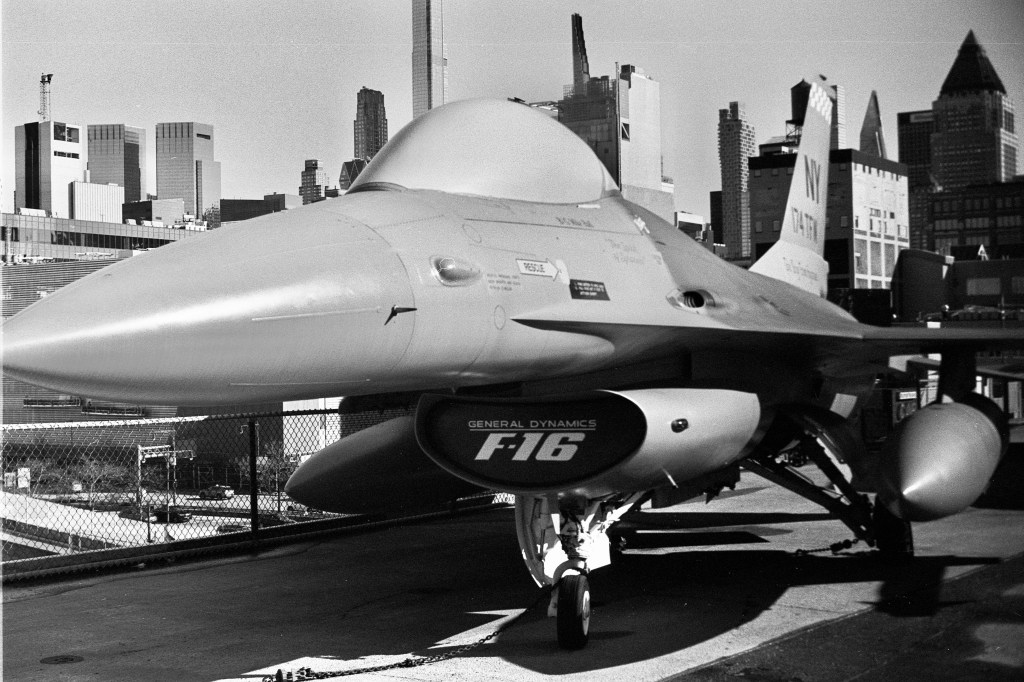
Some photographers become deeply involved with exposure, film types, and developing and printing processes. After spending 50 years taking images with film cameras, I now use one film – Fomapan 100 – and one developer – Rodinal. I develop films at 20 degrees C for 10 minutes, and that is it. For further information, the negatives are scanned at 3000 dpi on an old Plustek 8100 scanner; I do not adjust settings or edit the images using software. What you see is basically what I recorded at the time. In truth, the scans do no justice to the sharpness seen in the negative’s emulsion.
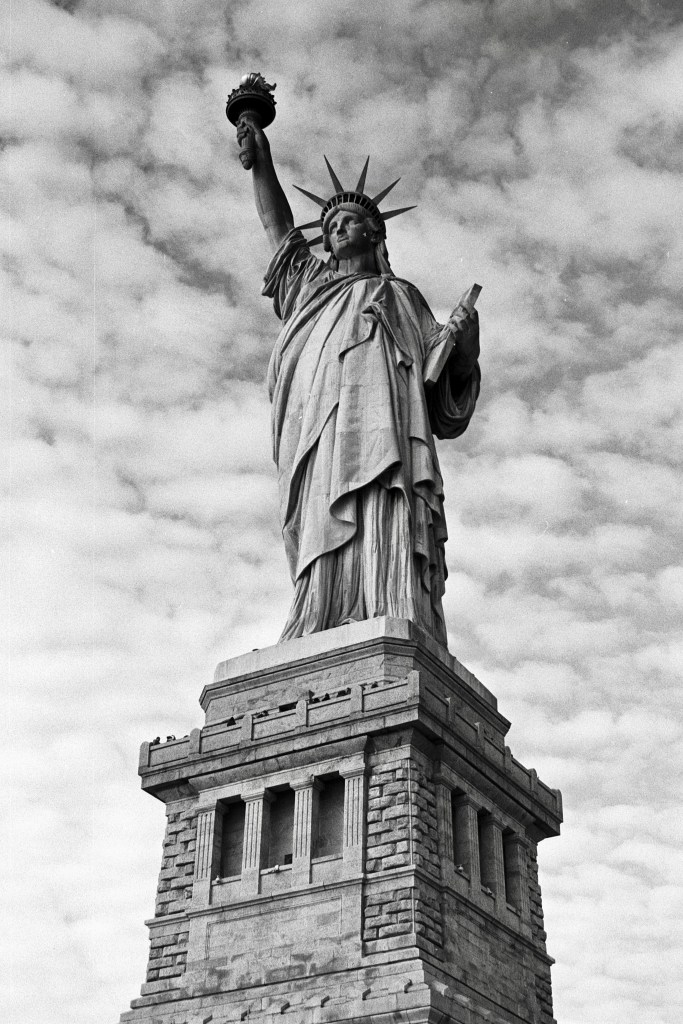
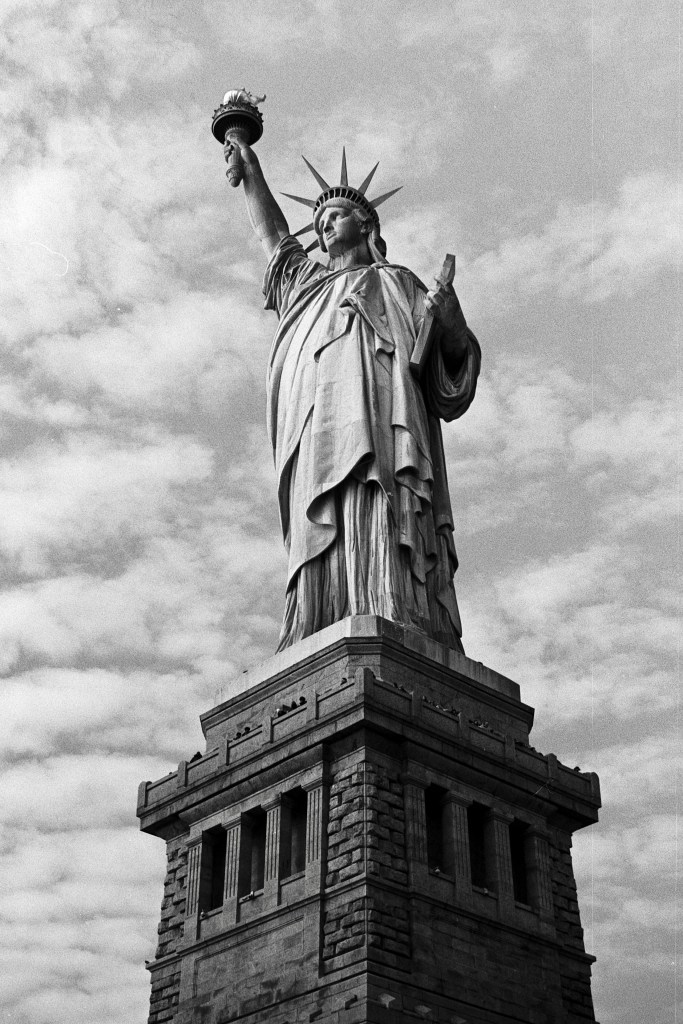
The two images of The Statue of Liberty look very similar. I only moved a few steps to gain a slightly different perspective. Note the change in the black of the plinth after only a minute and slight movement. This is a result of the change in light falling on the statue and the camera’s exposure setting being the same. (1/125 @ f8). Of course, it would be simple to make adjustments to make the images similar. However, the differences will appeal to various peoples eyes and preference. What we can see is the wonderful contrast and detail of the lens.
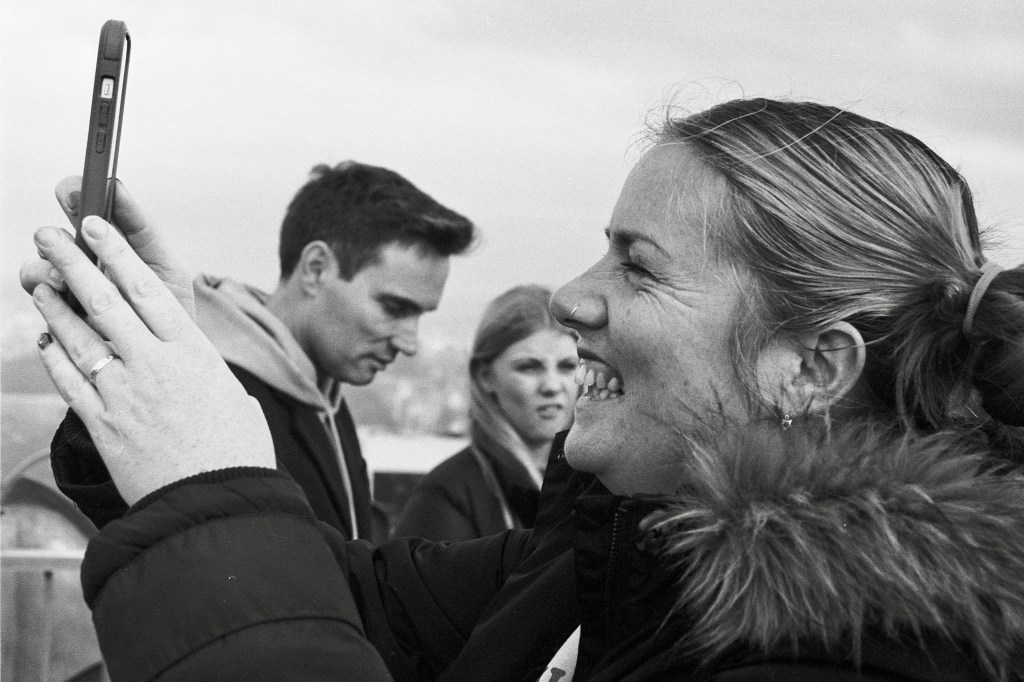
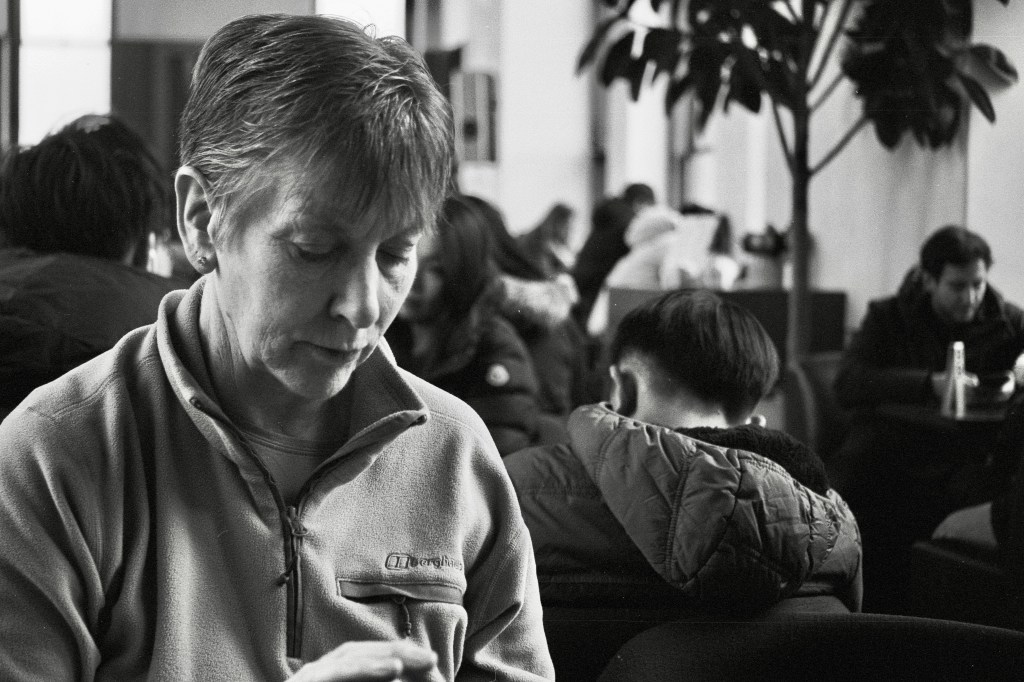
Here are two ‘snap shot’ portraits. The girl with the iPhone is clearly loving her subject. The lady looking at the iPhone seems to be more involved. The indoors image is f3.5 and the focus point is incorrect. However, the subject matter provides an excellent insight into the capability of the lens (the shutter speed is 1/30th of a second). The camera and lens setting for the girl taking the photo is 1/125 @ f8.0. Look carefully at the images and you will see just how far out was my focussing of the camera! And yet the subjects and composition works. If you click on the images and look around the composition, you’ll discover incredible areas of sharpness. The lens has fantastic resolving ability.
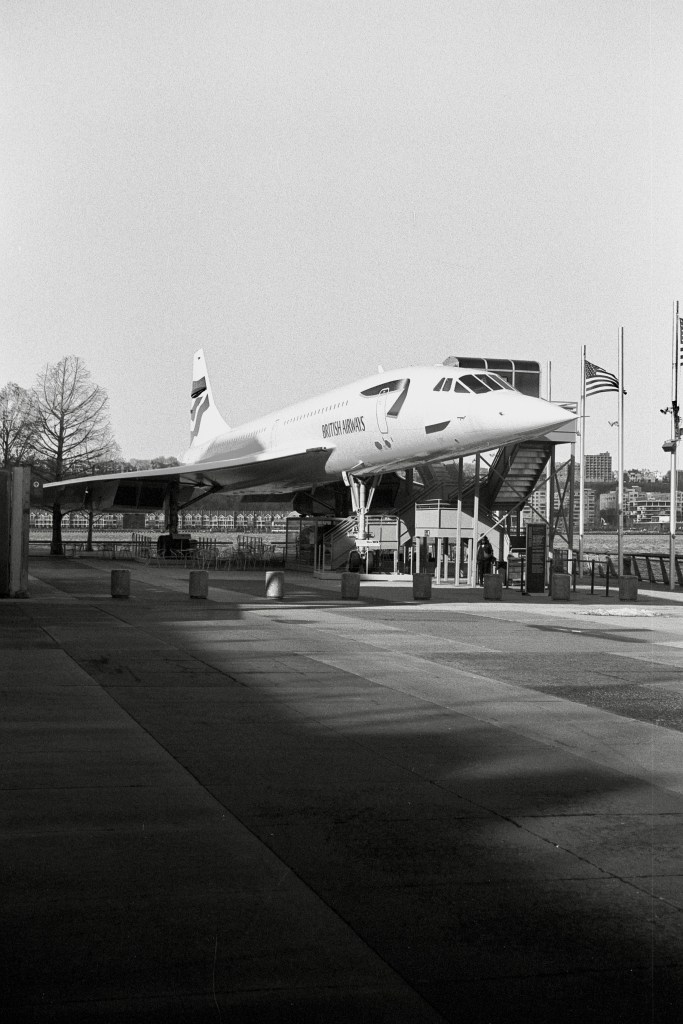
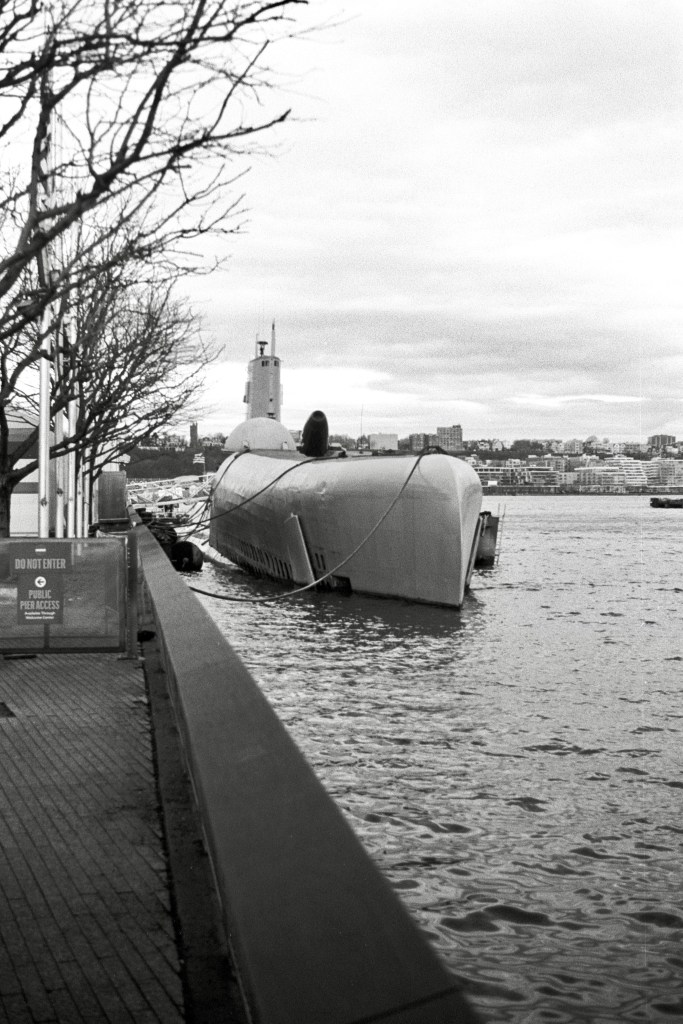
Concorde and USS Growler are typical subject matter for this walkaround camera and lens combination. They are photos of interest and suitable for testing one’s composition ability. Again, the resolving power of the lens is superb. Easily bettering my Leitz Elmar and Zeiss Sonnar 50mm F1.5. Cosina/Voigtlander did their optical sums when developing the 50mm Helier collapsible. As you may know, only 500 of the ‘101 years anniversary limited edition’ examples were produced. Although the figure may be higher, there is no definitive answer. You can see the ‘101’ anniversary logo alongside the lens elements grouping engraved on the side of the lens.
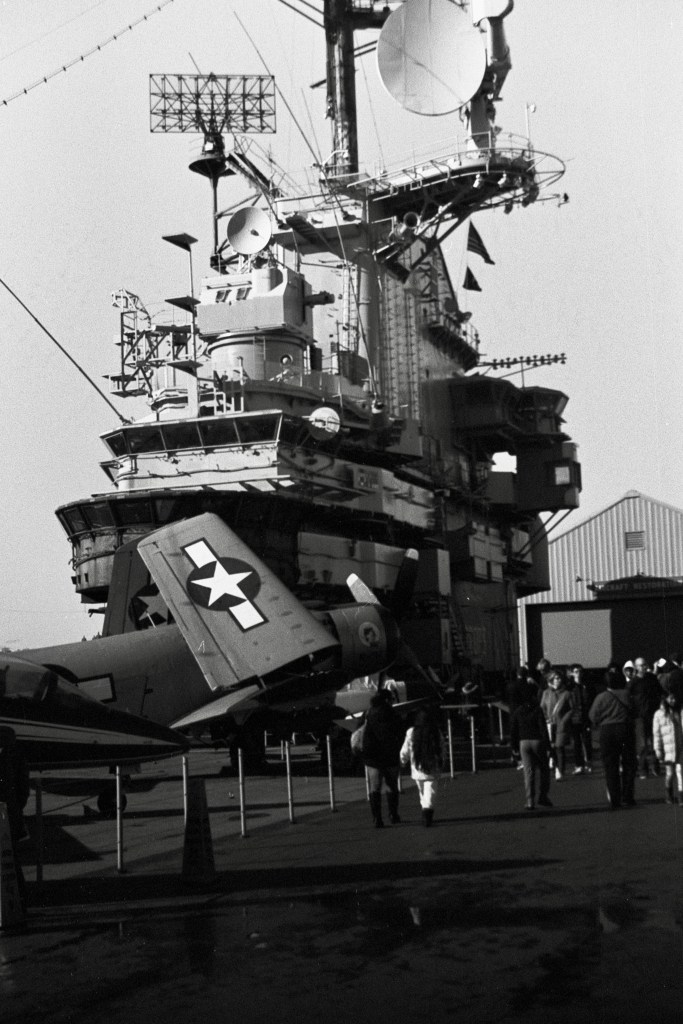
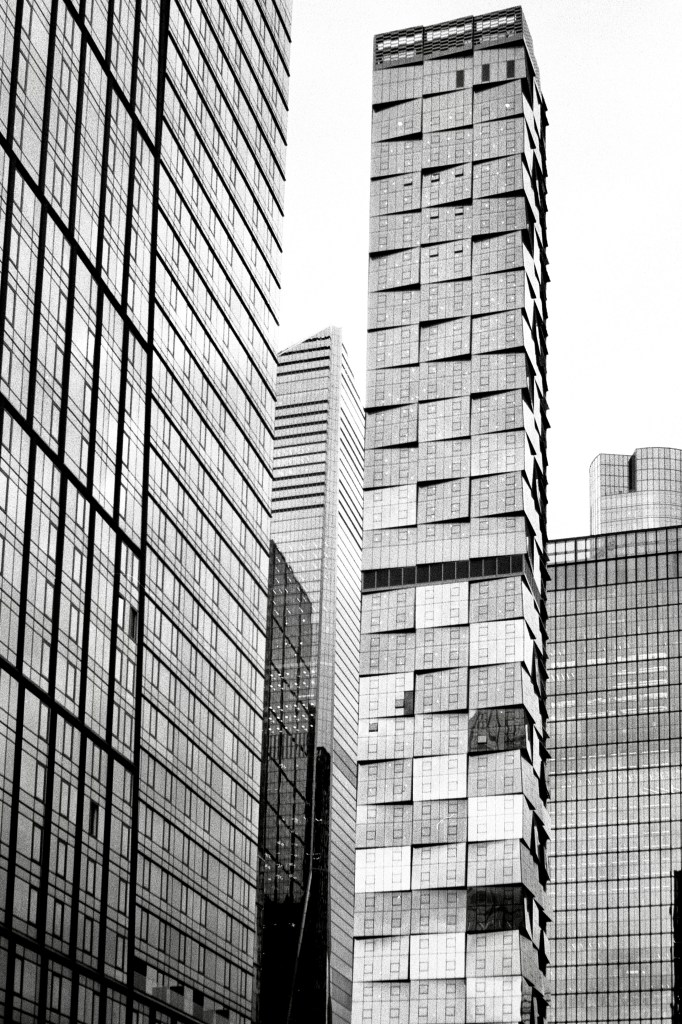
USS Intrepid is a fascinating subject. I choose this image because of the high contrast aspect of the image. The tall building also demonstrates Fomapan 100 film’s latitude. Do not be fooled into thinking the lens has distortion or ‘barrelling’ when reviewing the building image. The distortion is purely one of upward tilt perspective. Distortion, is to all extent none existant!
Some may question the so called ‘slow’ nature of the lens. F3.5 will make the lens very forgiving for depth of focus. I don’t have an issue with this, by cropping tight and always looking for a central or main subject lack of diffused background is of little importance. Refer to the two portrait ‘snap shots’. Even though the background subject matter is clearly visible, the lens has an almost 3d resolution. Easily isolating the composition.
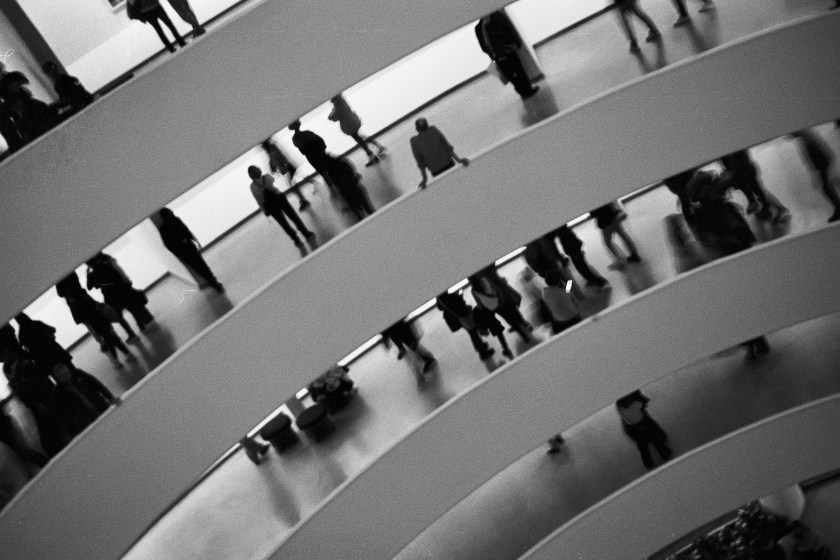
My final image was taken at the Guggenheim Museum. The angle is deliberate. The camera was in my hand, resting on the wall. The exposure was F3.5, and the shutter speed was 1/8th of a second. If you look carefully along an imaginary horizontal centre line and 3/4 away from the left, there is a white rectangle. Initially, I thought this was dust or grit on the emulsion of the negative. On closer investigation, we see that it is a phone being viewed! It is easy to realise the potential of this remarkable lens. This was the first film cassette to run through the camera using the Helier 50mm. I’d imagine a day or two with the combination would mean getting to know the handling slightly better, thus improving speedier focus on subjects such as the two portraits. The potential is as far as the imagination will take the photographer.
Its resolving ability is incredible. The contrast is as good as any lens I’ve used, including the Hasselblad Planar 80mm. I’d imagine a dedicated photographer who paid great attention to exposure and used a high-resolution film and developer combination (Pan F and Perceptol, for example) would attain incredible and razor-sharp results. If you wish to own a rare and different lens and want to update a LTM rangefinder camera to modern optical ability. Maybe this lens is worth the search and expense. I will never sell this lens, and I expect it will become my ‘go-to’ lens for many years.
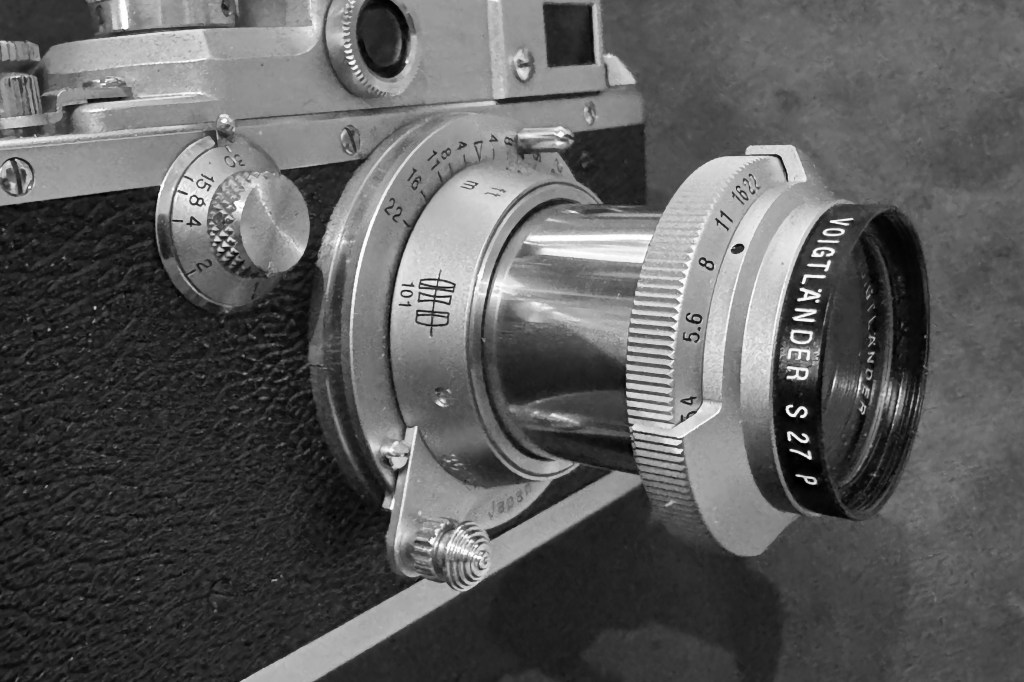
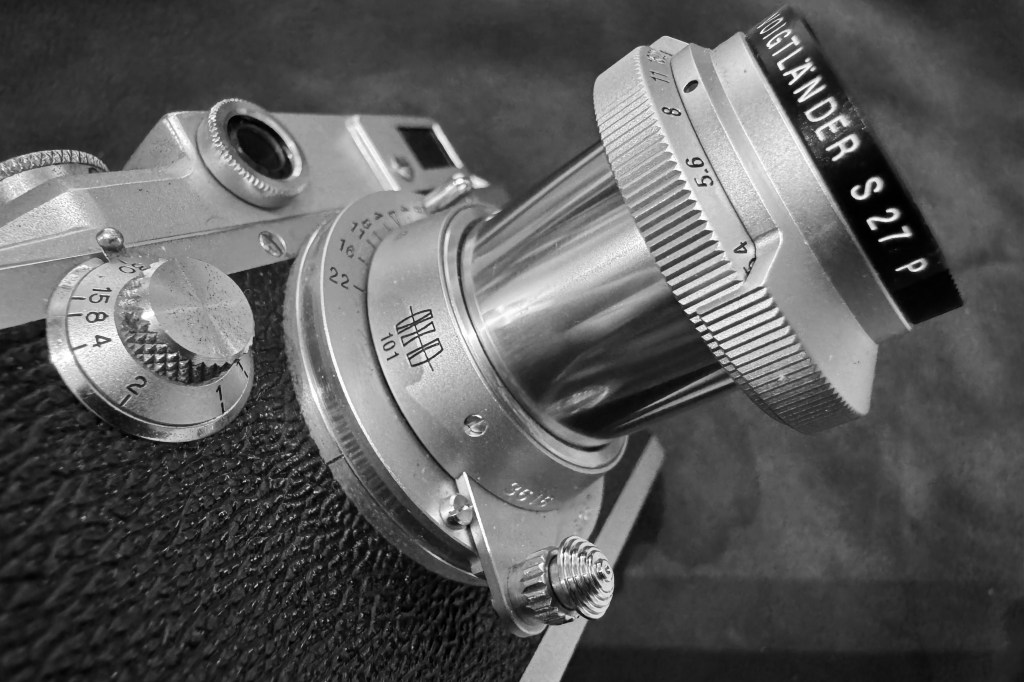
Many thanks for reading my review.
 The Heart of the Mind