At harvest time, Rob, Cathy, Liz and I spend three days over three weekends making strong cider. This post is about the process of making 75 litres of truly excellent sweet cider. We do not worry too much about the actual alcoholic strength, but you do not want to drink too much!
The process begins with cleaning all equipment:
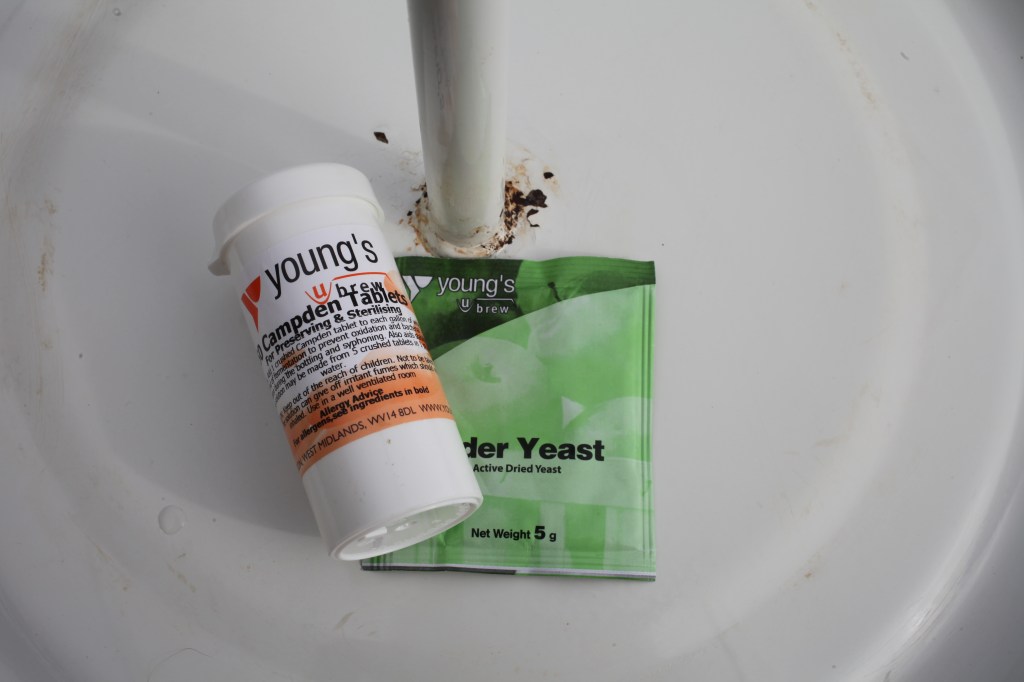
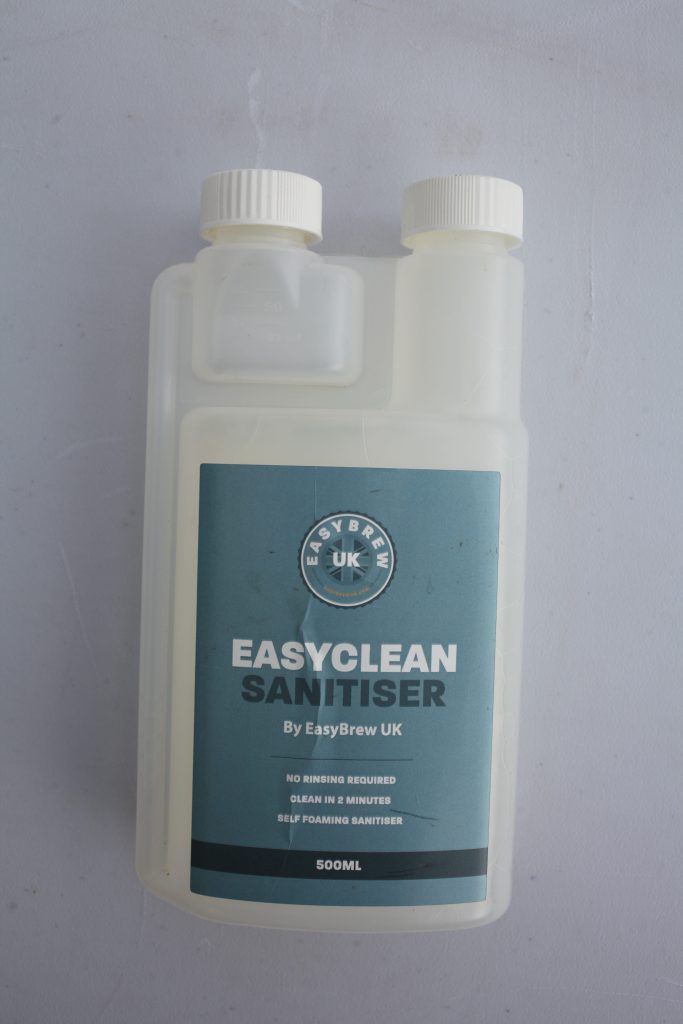
This is the most essential aspect of any brewing process. From wine to cider, if there are bacteria present, the brew is ruined. The EasyClean is very strong and kills all bacteria. Some people use Campden tablets. I use it at the end of the process to kill the natural yeast before adding the fresh yeast.
The small orchard has apple trees producing different apples. I do not know their generic names. There are sweet, sour, or tart, cookers, and crab apples. They are all crushed and pressed together to produce the cider. Of course, the cider produced isn’t consistent in taste; this is no concern. The cider is sweet and strong.
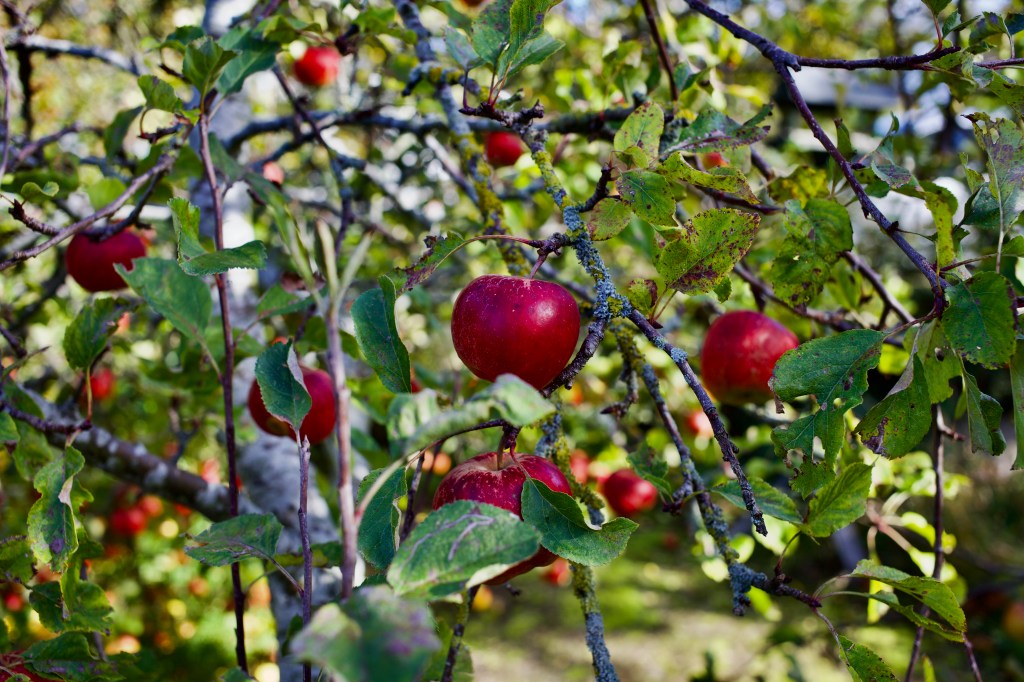
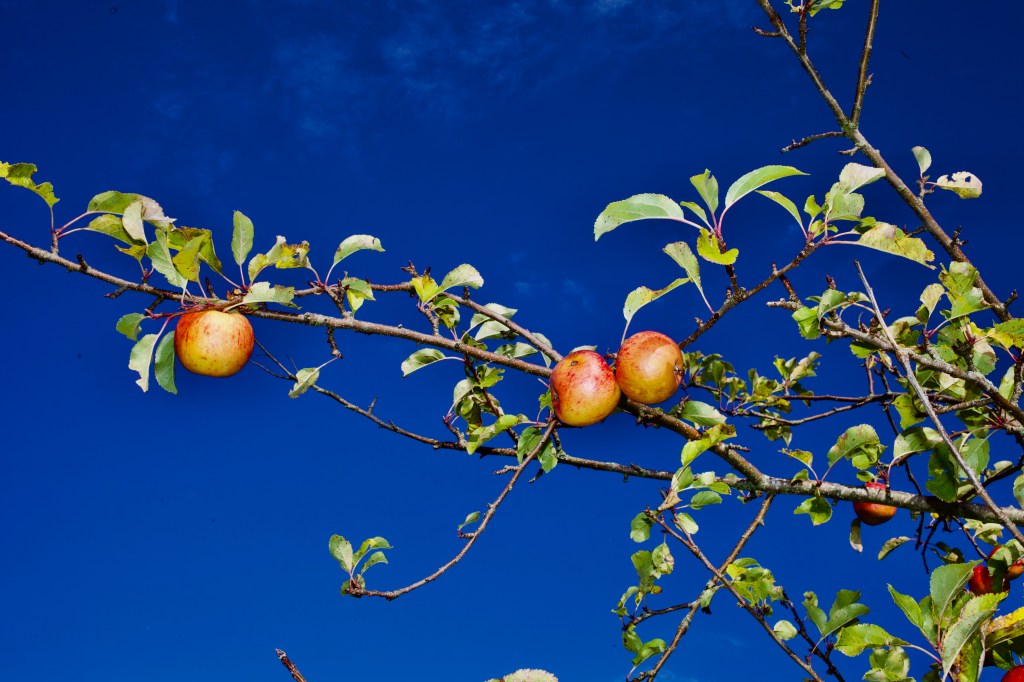
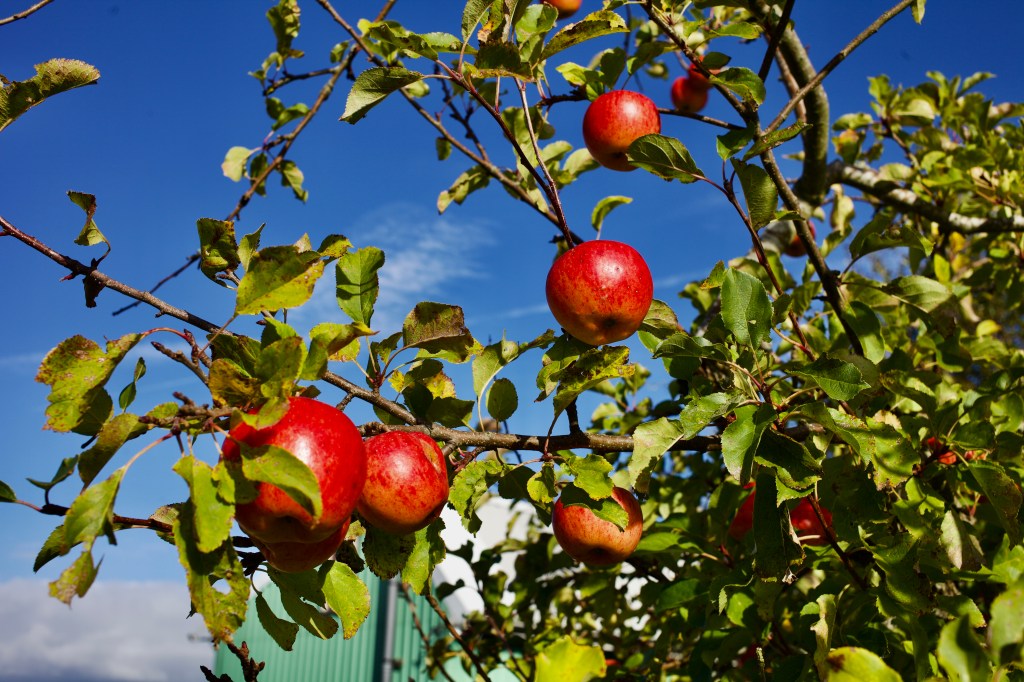
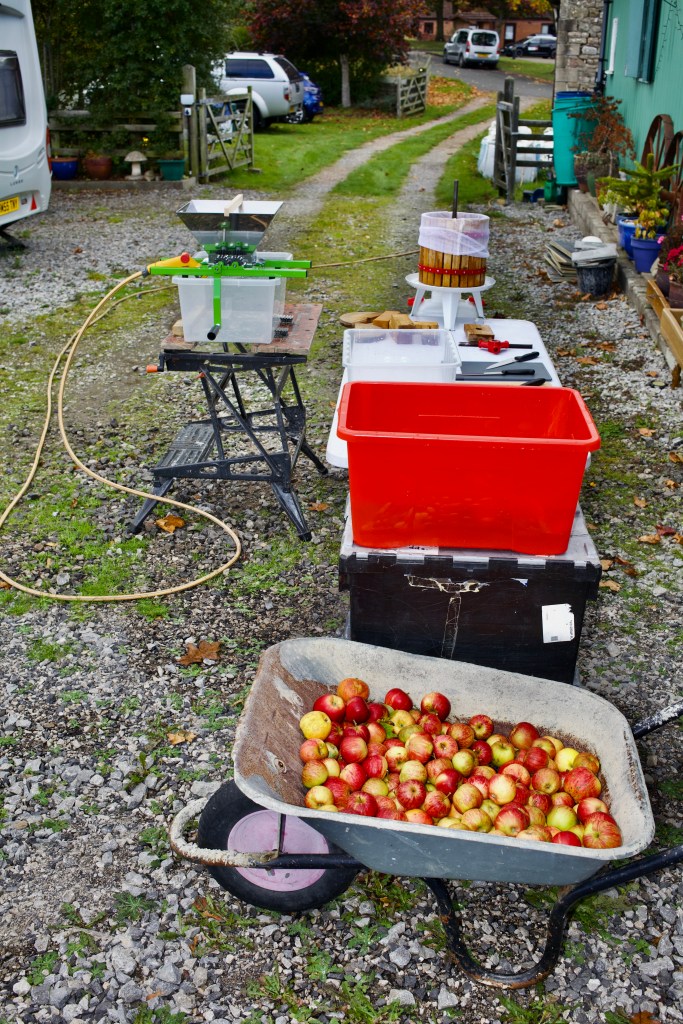
The trees are very healthy, and this year the apples are plump and have yielded super-quality juice. Cathy collects the apples. First, wash the apples, then chop them.
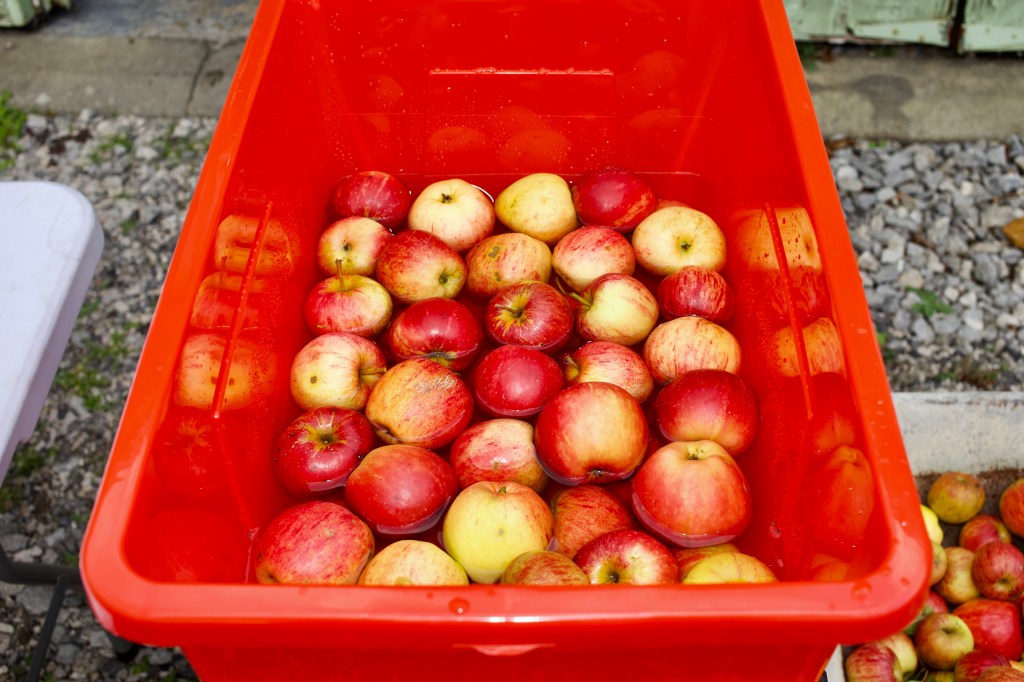
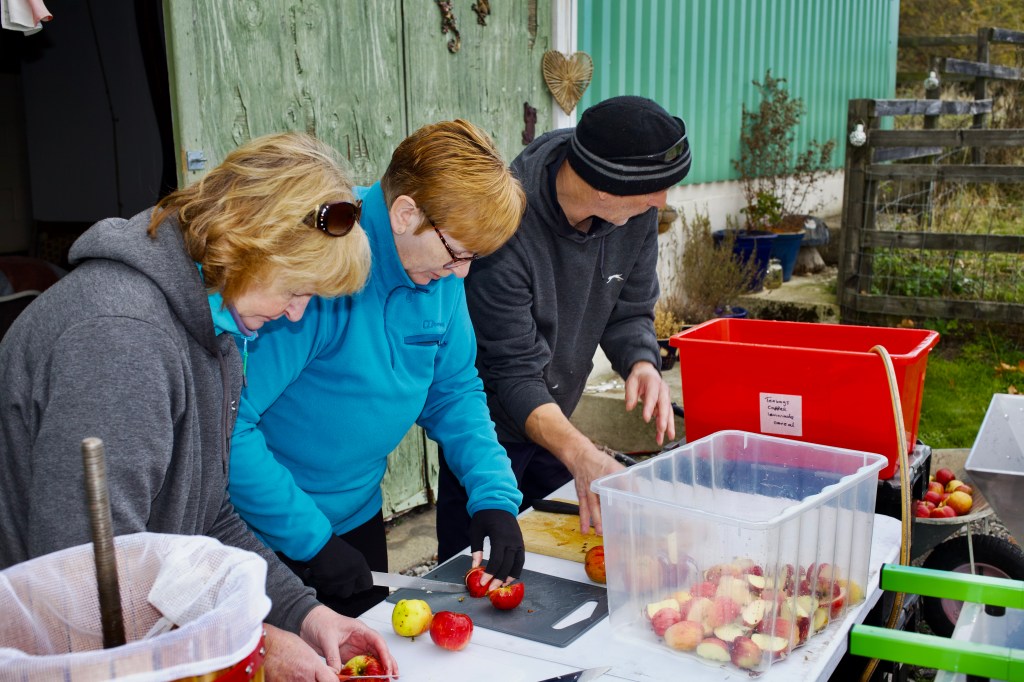
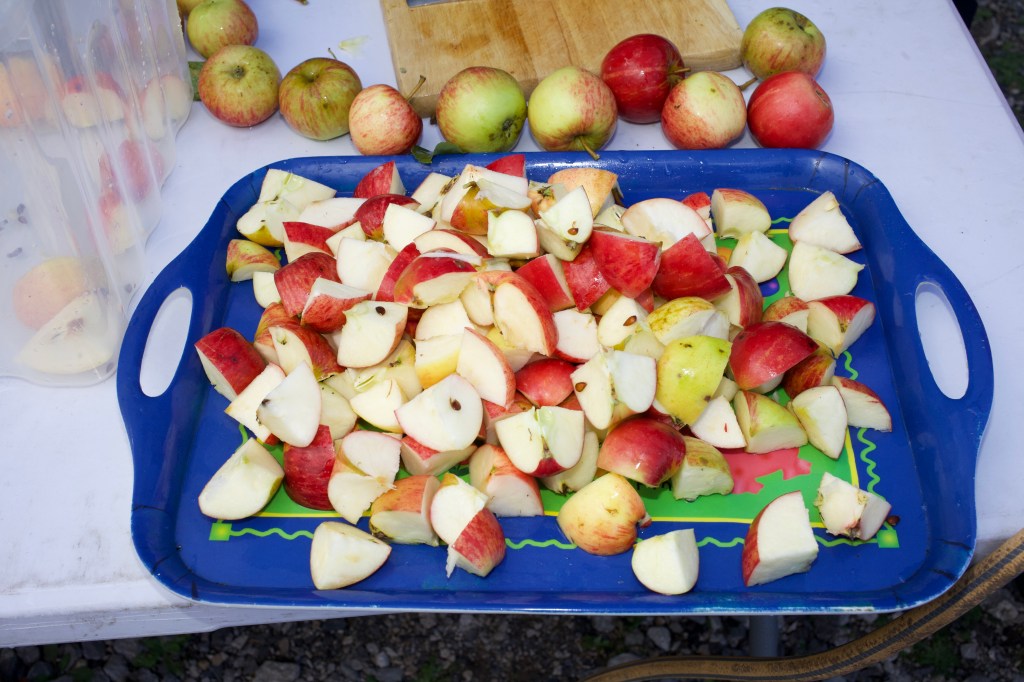
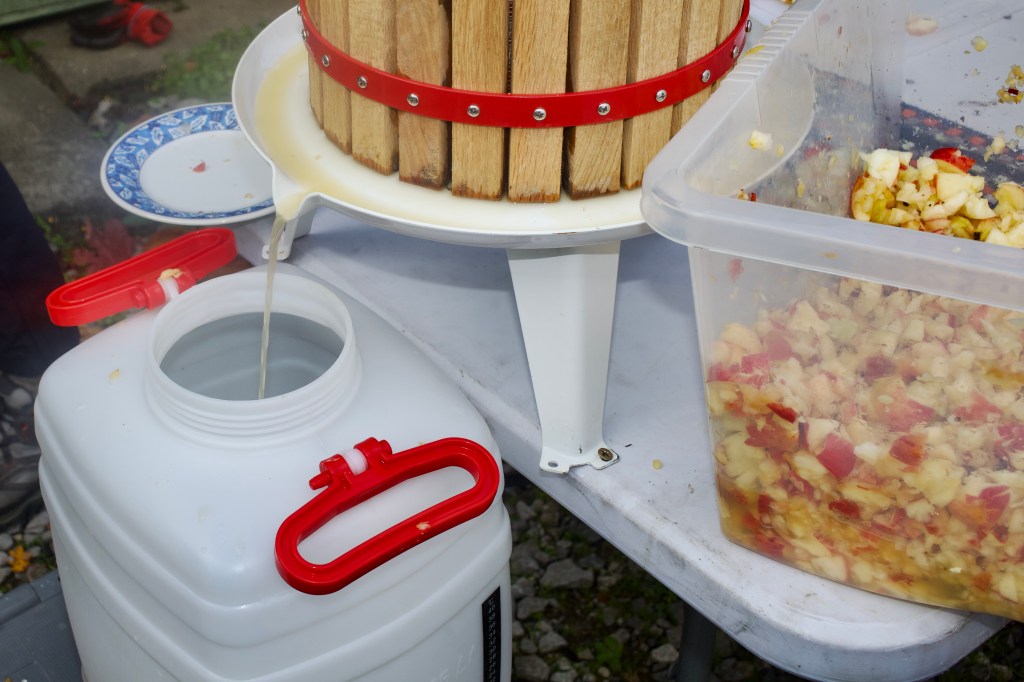
We have a small crusher. Cut the apples fairly small so no blockages occur when turning the mechanism. I manage this process. We then put the pulped apples into the press for the first pressing. After the initial pressing, we return the pulp to the grinder to regrind it. This second grinding releases a surprising amount of juice and is well worth the effort. If I were younger, I’d seriously consider a large cider-making facility. In the UK, you can sell up to 7000 litres of cider without duty. This would yield a very worthwhile financial return in addition to honey and lamb meat production.
The cut apples are now crushed:
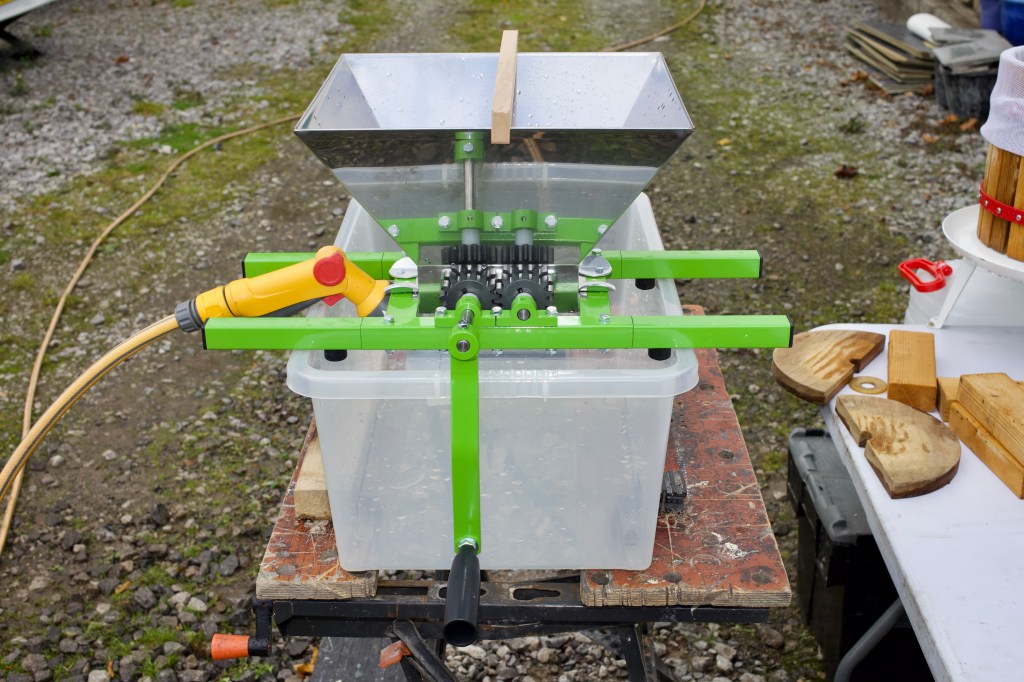
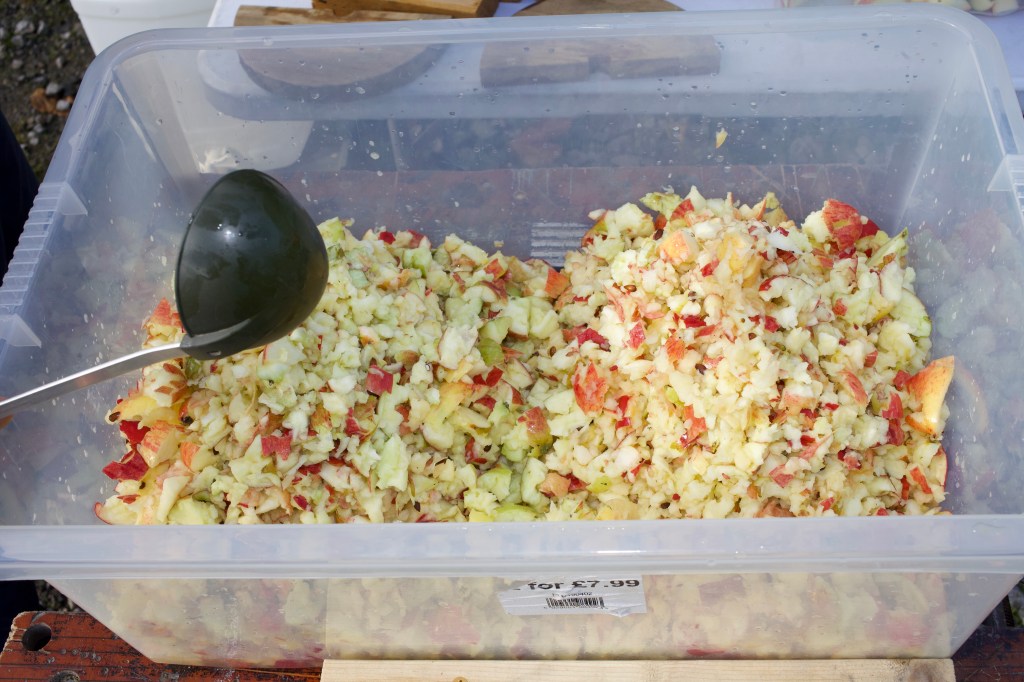
It is interesting how much juice comes out of each pressing. Rob and I think the pulp could sit overnight to release more of the precious liquid. I have read that some cidermakers add 20 per cent of water to the sweeter juice made from a mix similar to ours. This would make no difference to the alcoholic strength, as there is plenty of sugar, while the additional yeast would convert it into alcohol. I doubt the cider’s taste would be much affected.
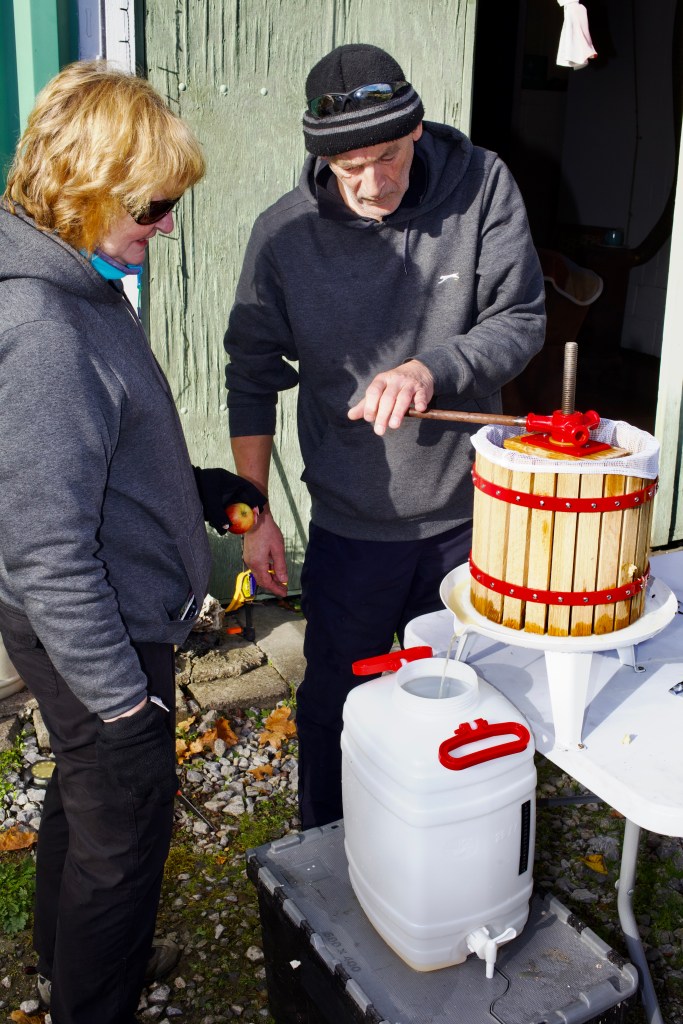
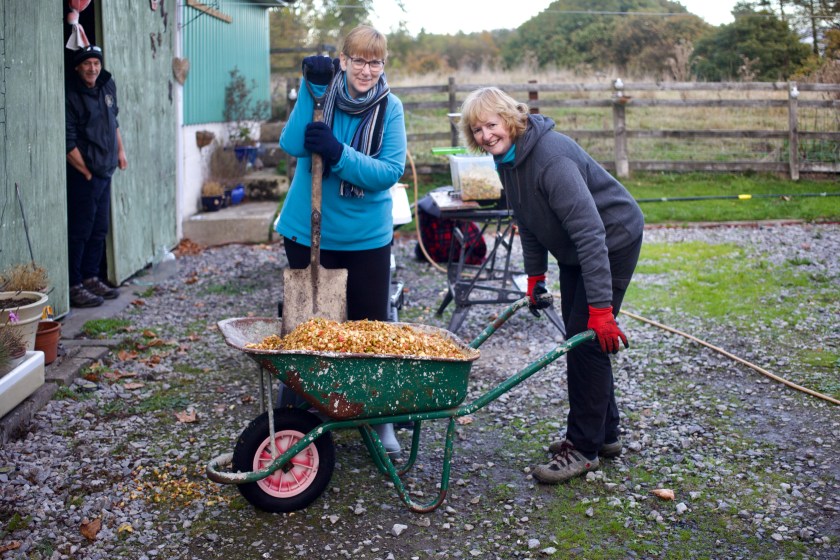
Cathy and Liz with the pulp which goes to the compost heap
Alcohol conversion.
Traditional cidermakers use the natural yeast on the apple skin to produce alcohol. No need to add sugar. Washing removes some of the natural yeast. To ensure no natural yeast carries over, crush Campden tablets and add them to the liquid for 24 hours to kill the natural yeast before adding fresh cider yeast to start fermentation.
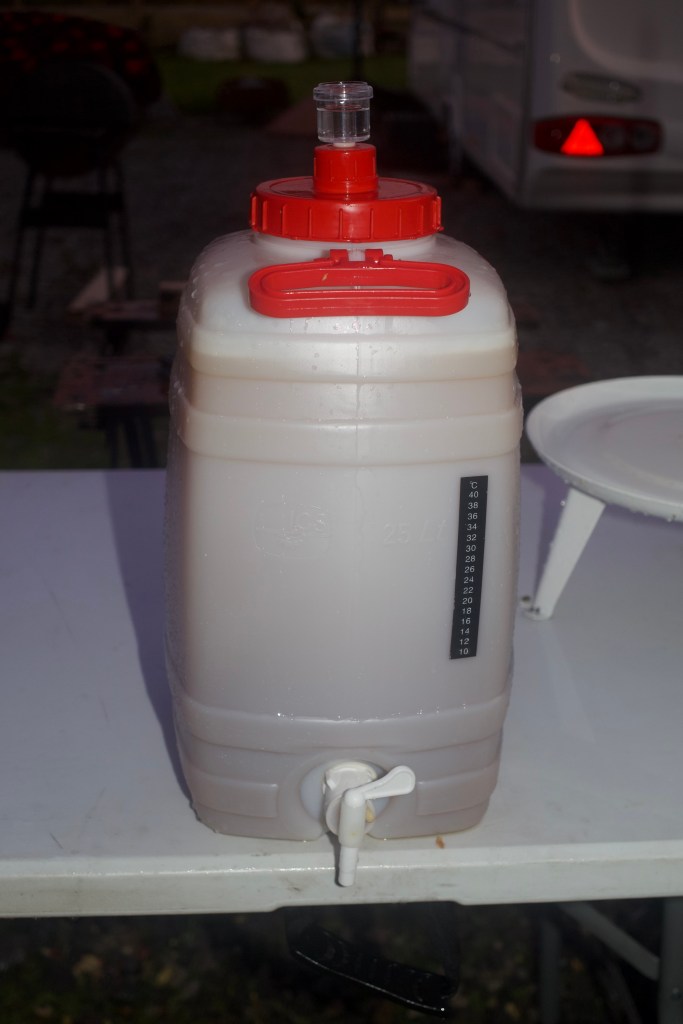
The final product:
After five hours of work, the first 25 litres!
Podcast:
I have recorded a few further thoughts about cider making and this post in a podcast. I also share other thoughts on smallholdings and off-grid caravan living.
Finally:
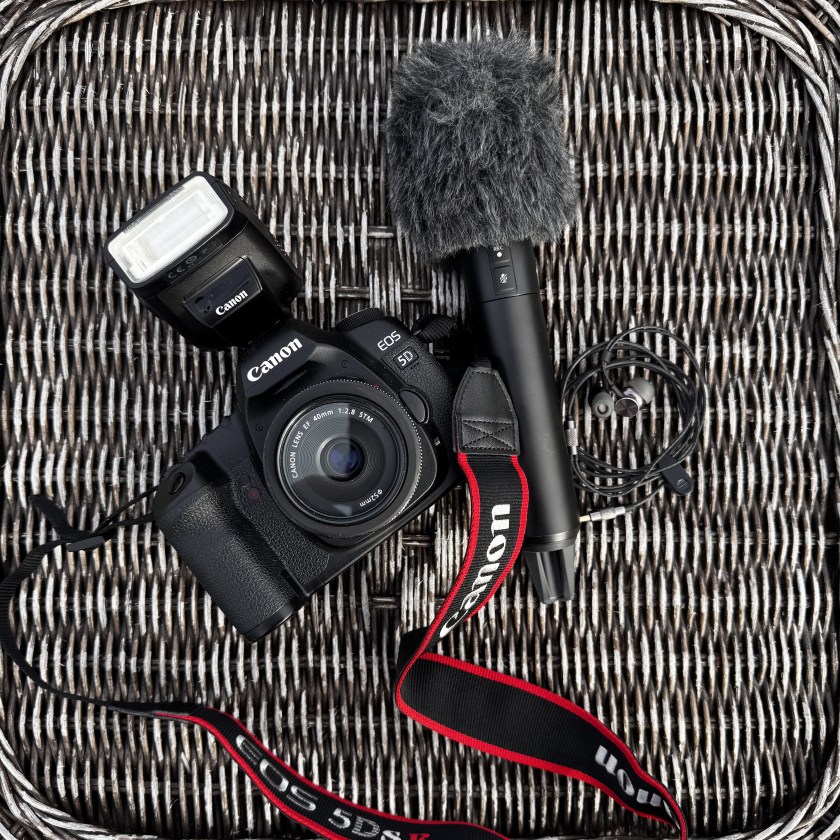
This WordPress site focuses on cameras and recording. For some time, I have used the most basic equipment to produce this type of post. One camera and lens, the brilliant Rode Interview Pro and Hindenburg Pro software. The latest Hindenburg Pro has a great transcription facility. This has many possibilities for both podcasters and bloggers.
Transcript:
So, here I am at the small holding in Yorkshire, very near Richmond, and uhm, it’s been a beautiful afternoon. Just a very slight drizzle now. And I’m still sitting outside enjoying myself.
There are apple trees in the small orchard, and I don’t know the apple varieties’ names. However, they’re all different. Eaters, cookers, some tart, some sweet. But it is a combination which makes homemade strong cider.
Some years ago, the harvest was given away. But the demand for free organic apples seems to be diminishing. And there are only so many apple pies that one can eat. Not only this, one can soon become tired of the pies. So, that option also diminishes as well. Freezing apples for later cooking has become a non-cost-effective exercise. So, the alternative is to make strong alcohol cider for personal consumption. The trees yielded about 60 to 75 litres of cider, and we make it over three one-day sessions. The weblog you’ll read and this weblog that you’re reading, and the podcast which accompanies it, is all about one day of the crushing, and pressing and filling of a 25-litre fermenting container. After fermentation, the cider will be bottled into 500 cc, or half-litre bottles. Some will have a small amount of sugar added; others will be left still. So the small amount of sugar just livens the cider up and makes it a little bit sparkly. And even though it’s rough, which is cloudy, the effect is absolutely beautiful to drink. A decent cider takes three to six months to fully mature, although once the fermentation is complete, cider can be drunk instantly. And it’s still absolutely beautiful, but that little bit of maturation really makes the cider work.
Early October is the best time to harvest the apples, and taking them directly from the tree to the press makes for a superb product. And the apples come off the tree, fresh and really healthy, and then they are washed, crushed, and then pressed, and then straight from the press straight into the fermenting container. You’ll see that in the photographs.
Cider apples are normally tart or sharp. But when mixing apples, eaters, cookers, and even crab apples, the final outcome is random, but it will be sweet and very strong indeed. As said, the process is simple. Collect the apples, cut to size, wash, crush, and collect juice into a fermenter. We re-crush the pulp again, and then press again to get more juice from the apple yield.
When washing the apples, it removes the natural yeast. And this is acceptable, because the most reliable way to make cider is to add captain tablets to the pressed juice, leave for 24 hours to kill the wild yeast and bacteria, and then add cider yeast to start the fermentation. It’s far more reliable and works extremely well. Sterilisation and cleansing are absolutely key to the process. We chose to use a stronger acidic cleaner, and the cleaner the equipment, the more certain of getting an excellent cider. As I’ve said, I’m recording this on a glorious Sunday. A little tired after sitting outside, watching the stars in the early morning. The sky was absolutely gin clear. Up here in Yorkshire, it’s amazing, because with the sky being so clear, it’s so easy to work out the constellations. It’s a marvellous, marvellous place to be.
If I were to make a choice today, it would definitely be a small holding with apples, bees, and perhaps sheep. Incidentally. With the amazing leaps in 12- or 24 volt solar systems, electricity now is virtually free. For example, last evening, we used everything in our fairly large caravan, the, uh, lights, charging computers, charging phone, watching Apple TV and a short use of the microwave, were all accomplished with absolute ease, and the battery bank only went down to round about 92% after eight hours of use last night, which is phenomenal, and this morning the batteries were fully recharged on a sunny cloudy day, and by 10.30 this morning, and bear in mind this is October, really you could live very, very easily these days, if so long as you’ve got good sanitary and water, the world is definitely your oyster, and this is why I have, uh, written my book about caravan based off-gridding. It’s nearly complete, and it’s possible many will find the concept of great interest. In this overpopulated world, it’s possible that only those with knowledge will survive under the most difficult of delusions.
I look forward to drinking a glass of cider in the new year, literally drinking the apple harvest from the fruits of our labour. Thanks for listening. I hope you enjoy the actual web log on this page, and the pictures will become very evident. Many, many thanks to Liz and Rob and Kathy, who were helping to make the cider, and of course, it’s Rob and Kathy’s small holding that we’re at, and I thank them so much for allowing us to use it almost as our own home, and I certainly think that as we near retirement now, that the small holding option will certainly be the one that we will be taking. Thank you for listening, have a lovely Sunday yourselves, and I hope you’ll read more of my blogs about this aspect of my life, and the future of us actually looking for, and buying our own small holding, where we replicate very much of the things that we’ve learned here at Richmond. Thank you.
See You Soon
NO AI HERE…

